How it works Results WTA Stats Tournaments Pricing Blog
Create account My account
← Tournaments Upcoming

WTA tournament · WTA 500

Berlin 2026

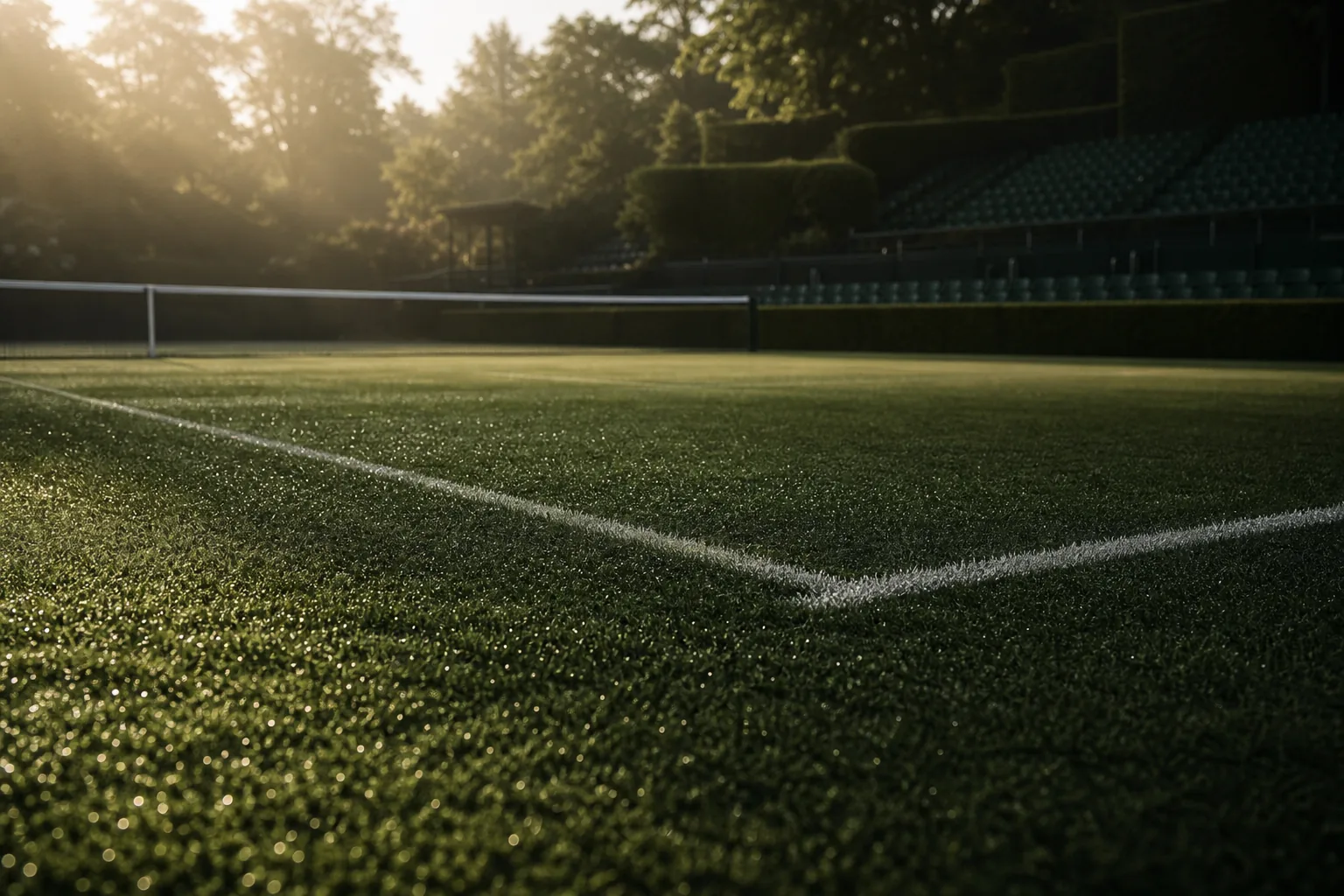
Grass in Berlin, GER, low bounce, early contact and smaller margins.

Dates
June 15 → June 21
Surface
🟩 Grass
Category
WTA 500
Location
Berlin, GER

Our take on the tournament

The bett1open in Berlin kicks off the European grass swing, three weeks before Wimbledon. A WTA 500 played at LTTC Rot-Weiss, the tournament forces a rapid pivot from the Roland-Garros clay. Reading the surface here is unusually tricky: few recent grass matches in player histories, short physical transitions, and German weather that alternates between covered and open courts. A setting where past form matters less than the ability to adjust to ball speed within a few days.

A European grass court, steadier than you might think

The Berlin grass belongs to the continental family of lawns, distinct from the classic English variety. The bounce is more predictable, the ball jumps slightly higher than at Eastbourne or Wimbledon, and surface wear stays contained over a single week of play. Conditions favor players with a heavy serve who can build on deep returns rather than rely on touch finishes. When the center court roof closes, ball speed climbs further, tightening exchanges and rewarding players who take the ball early. The steady bounce penalizes those who depend on pronounced spin.

Clay to grass transition, the heart of the difficulty

Three weeks separate the Roland-Garros final from Wimbledon, and Berlin lands right in the middle. The calendar forces a radical mechanical shift: no sliding footwork, earlier ball strike, lower posture on returns. Not every player switches at the same pace. Some arrive still calibrated for clay after a long Paris run, others have already taken a break following an early exit and approach Berlin with a few days of dedicated grass training. This heterogeneity explains why the tournament regularly sees gaps between official ranking and actual early-round performance.

Why the calibrated model stays cautious

Our calibrated model works with a limited sample of recent grass matches per player, since the tour only features four to five weeks on this surface each season. The surface read incorporates that uncertainty: probabilities come out less sharp than during the heart of clay or hard court season. In Berlin, the effect is amplified by the fact that each player's grass calibration for the year is still unobservable. The signal becomes exploitable mainly when intrinsic skill gaps remain wide, or when technical profiles are clearly better suited to fast courts than others. On tight matchups, the Berlin fortnight remains a place where statistical humility is in order.

Track this tournament live

Live matches, detected edges, daily picks · inside your member area.

Open member area →